การใช้จ่ายด้านโฆษณาดิจิทัลในประเทศไทย
In Thailand recently, not only BtoC companies but also BtoB companies are feeling that marketing has been shifted to digital accelerating, but how much scale and speed is it actually progressing?
This time, we will focus on “advertising” and look at the trends in Thailand while comparing with situations in Japan.
We hope you find it useful for future marketing plans in Thailand.
Digital Advertising expenses in Thailand (~2017)
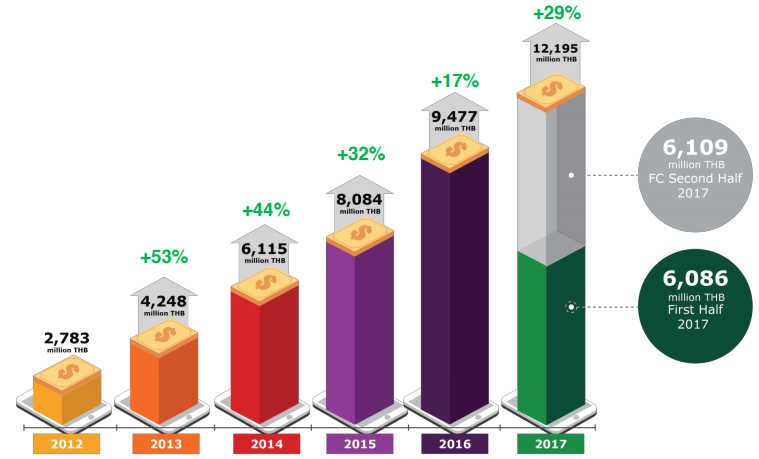
Source:Digital Advertising Association (Thailand) / DAAT
Thailand’s digital advertising expenses in 2017 were 12,195million THB, an increase of about 340% compared to 2012 which is about 36.6billion yen ( calculated by 1 THB= 3yen).
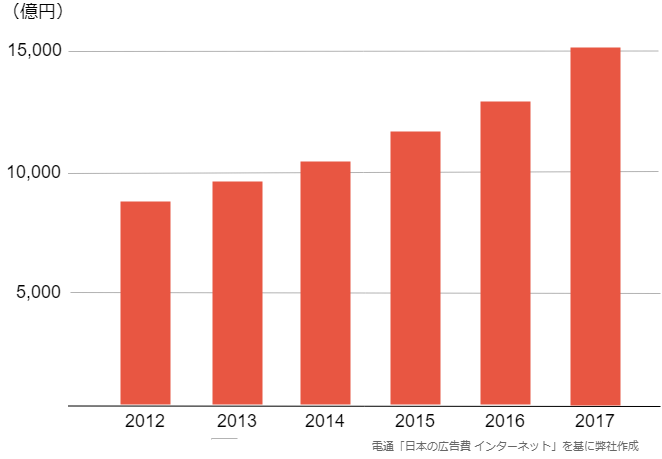
In 2017, Japan’s digital advertising expenses were 1,509.4billion yen (increased about 70% compared to 2012). Compared to this, Thai digital advertising market is small, yet it it continuously growing over the years.
Digital Advertising expenses in Japan (~2017)
Next, let’s look at changes in advertising costs for the four media (TV, newspaper, magazine, radio) that are representative of traditional advertising.
First is Thailand.
4 media advertising expenses in Thailand (THB)
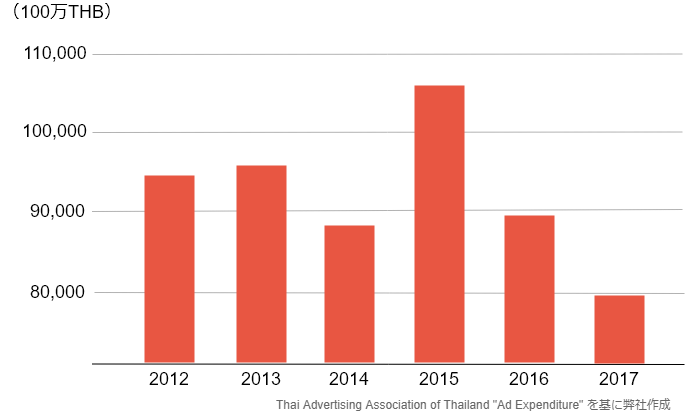
In 2017, advertising costs for 4 mass medias in Thailand (TV, newspaper, magazine, radio) were 79 million THB, a decrease of about 15% compared to 2012.
If you compare the transition of digital advertising and traditional advertising, you can see a clear digital shift in Thailand.
What about the situation in Japan?
4 media advertising expenses in Japan
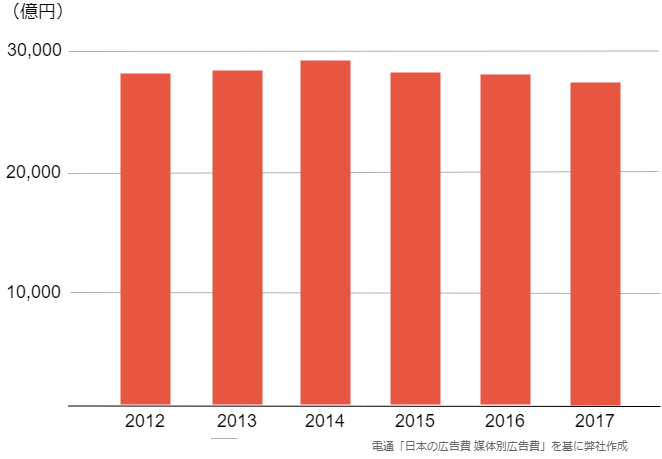
In the 5 years from 2012 to 2017, the advertising expenses for the 4 Japanese media (TV, newspaper, magazine, radio) have been flat (no increasing or decreasing).
In Japan, the scale of traditional advertising has not changed, and the scale of digital advertising has expanded. From the above we can observe that the flow from “traditional advertising to digital advertising” is a significant trend in Thailand compared to Japan.
Next, let’s look at what industries in Thailand are actively investing in digital adveritsing.
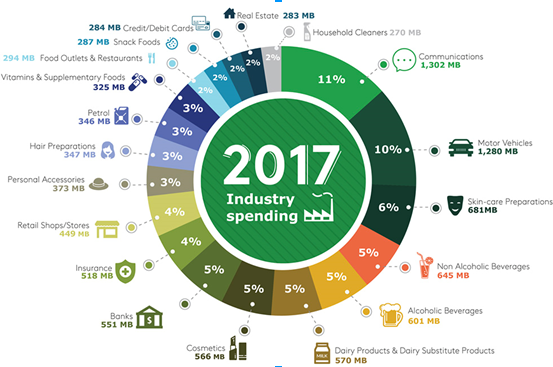
Digital advertising expenses by industries in Thailand
Source:Digital Advertising Association (Thailand) / DAAT
Telecommunications companies such as AIS, dtac, and true spend the most money on digital advertising. Since there are many services via smartphones, there are digital advertising strategies based on this to reach the targets.
Next is automobile related industries. Then skin care, beverages, daily necessities and cosmetics. This shows that digital advertising is generally used, not just for the youth targeted industries.
So how do these companies run digital advertising?
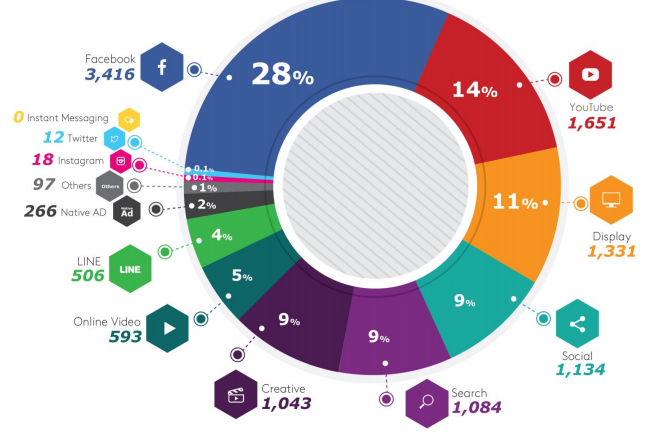
Here are the digital advertising expenses by media.
Digital advertising expenses by media in Thailand
Source:Digital Advertising Association (Thailand) / DAAT
The largest number follows Facebook and Youtube. Thailand has the largest numbers of LINE users after Japan, but it may be said that the advertisement utilization in LINE is restrictive.
Finally,
The reason why the user of digital advertising by companies in Thailand is spreading rapidly is because of the results of easily achieved due to the high use of internet usage and smartphones.
We can help you with digital marketing for Thai market. If you have any problems, please feel free to contact us.